Cornell, MIT and others can appeal class action status in antitrust case
An article from Cornell, MIT and others can appeal class action status in antitrust case
Former students accused the colleges of colluding to fix tuition prices and lower financial aid offers.
Published Aug. 25, 2026 Ben Unglesbee Senior Reporter
-
 Share
Share-
 Copy link
 -
 Email
Email -
 LinkedIn
 -
 X/Twitter
 -
 Facebook
 -
 Print
Print
-
-
 License
 -
 Add us on Google
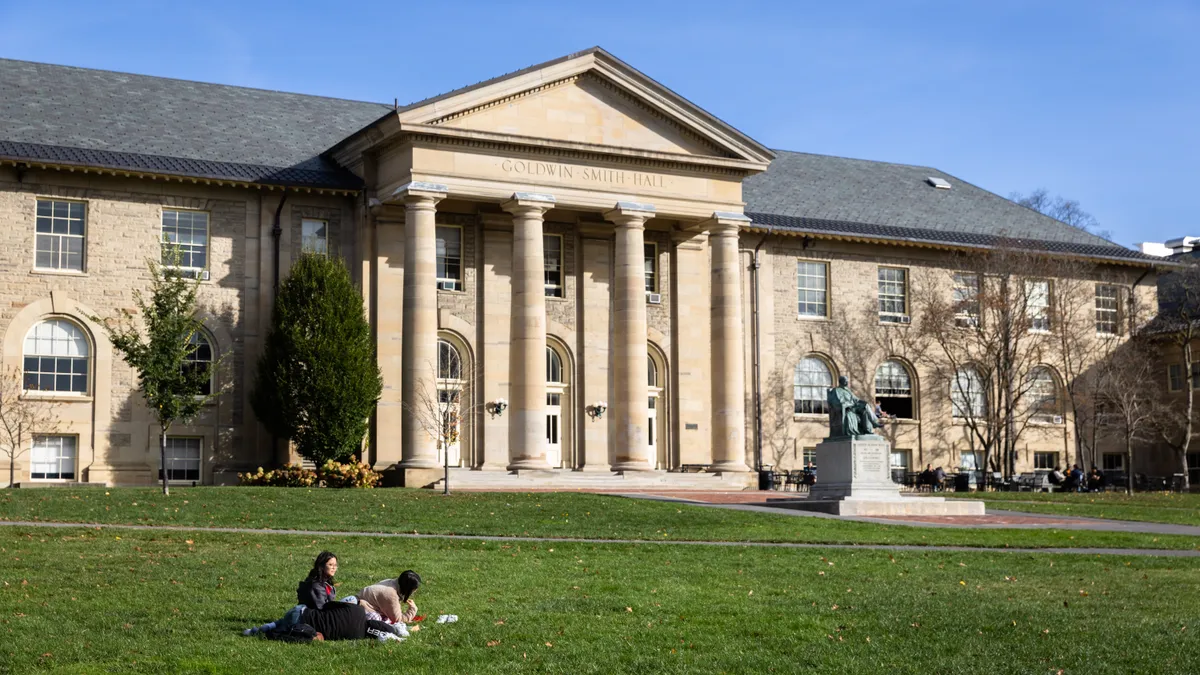
Cornell University students sit outside on Nov. 3, 2023, in Ithaca, N.Y. The Ivy League university is one of five institutions still fighting a lawsuit that accused highly selective colleges of price fixing through their financial aid systems. Matt Burkhartt via Getty Images Listen to the article 3 min This audio is auto-generated. Please let us know if you have feedback. Dive Snapshot:
- Five highly selective colleges can appeal the class action status of an antitrust lawsuit filed nearly five years ago after an appellate court ruling Monday.
- A group of former college students sued in early 2022, alleging that over a dozen defendant institutions took part in a price-fixing scheme that lowered financial aid offers and drove up tuition costs. A majority of the named colleges have since settled.
- The 7th U.S. Circuit Court of Appeals ruled Monday that the remaining five colleges can appeal on a single issue related to a district judge's analysis of expert testimony in deciding to certify the case as a class action in June.
The impact:When the district court certified the case against the remaining plaintiffs — Cornell University, Georgetown University, the Massachusetts Institute of Technology, the University of Notre Dame and the University of Pennsylvania — their total potential liability in damages rose from $100,000 to at least $1.7 billion. That’s because the size of the potential plaintiff class became 220,000 people, according to court filings by the defendants.
Attorneys for the colleges argued in a July appeal petition that the decision to certify the plaintiff class relied on a data model that was “untethered from the challenged conduct and common sense.”
if (window.dfp_visibility === 'mobile' ) googletag.cmd.push(function() googletag.defineSlot( '/3618/highereddive/highereddivehybrid1', [[300, 250], 'fluid'], 'dfp-hybrid1-mobile' ).addService(googletag.pubads()); ); waitToLoadAds.push(function() googletag.cmd.push(function() if (window.dfp_visibility === 'mobile' ) window.onDvtagReady?.(() => googletag.display('dfp-hybrid1-mobile')); googletag.pubads().addEventListener('slotRenderEnded', function (event) var adUnitPath = '/3618/highereddive/highereddivehybrid1'; var onProformative = false; if (onProformative && event.slot.getAdUnitPath() === adUnitPath && !event.isEmpty ) var adUnitPathWithVisibility = adUnitPath + '-mobile'; var selector = '.pf-comments__ad-wrapper #dfp-hybrid1-mobile'; if (!$(selector).closest('.pf-comments__ad-wrapper').hasClass('borders')) $(selector).closest('.pf-comments__ad-wrapper').addClass('borders') ); ); ); if (window.dfp_visibility === 'desktop' ) googletag.cmd.push(function() googletag.defineSlot( '/3618/highereddive/highereddivehybrid2', [[300, 250], 'fluid'], 'dfp-hybrid2-desktop' ).addService(googletag.pubads()); ); waitToLoadAds.push(function() googletag.cmd.push(function() if (window.dfp_visibility === 'desktop' ) window.onDvtagReady?.(() => googletag.display('dfp-hybrid2-desktop')); googletag.pubads().addEventListener('slotRenderEnded', function (event) var adUnitPath = '/3618/highereddive/highereddivehybrid2'; var onProformative = false; if (onProformative && event.slot.getAdUnitPath() === adUnitPath && !event.isEmpty ) var adUnitPathWithVisibility = adUnitPath + '-desktop'; var selector = '.pf-comments__ad-wrapper #dfp-hybrid2-desktop'; if (!$(selector).closest('.pf-comments__ad-wrapper').hasClass('borders')) $(selector).closest('.pf-comments__ad-wrapper').addClass('borders') ); ); );
The plaintiffs' case included a statistical regression model meant to show the damage caused by the colleges’ alleged antitrust behavior. But the colleges alleged the model included students who paid no tuition as examples of those who were overcharged as well as “wild and inexplicable year-to-year swings in individual students’ purported overcharges and undercharges.”
Whether the district court “adequately analyzed expert testimony” around the model is the sole issue the 7th Circuit will consider regarding the appeal of class action status, according to Monday's order.
The context:In 2022, the former students sued 17 highly selective private institutions that were part of the 568 Presidents Group, a now-defunct consortium of need-blind colleges collaborating on their financial aid formulas.
Plaintiffs branded the consortium the “568 Cartel” and alleged it “explicitly aimed to reduce or eliminate price competition among its members.” Overall, the member institutions collectively overcharged some 170,000 students by at least hundreds of millions of dollars, according to the complaint.
The majority of the original defendant colleges have settled with plaintiffs in recent years, agreeing to pay a total of nearly $320 million.
What we’re watching:The remaining colleges will have a chance to significantly lower the stakes of the lawsuit on appeal, though the case could still go one of several directions from here.
Nor is it the only antitrust case currently playing out in higher education. A federal judge ruled earlier this month that a lawsuit can proceed against 32 institutions over their use of early decision admission processes.
- Add us on Google
- Share
- Copy link
- Email
- LinkedIn
- X/Twitter
- Facebook
- Print
-
 License
-
Filed Under: Legal, Students, Enrollment Higher Ed Dive news delivered to your inbox
Get the free daily newsletter read by industry experts
Email:
- Select user consent: By signing up to receive our newsletter, you agree to our Terms of Use and Privacy Policy. You can unsubscribe at anytime.
Sign up A valid email address is required. Please select at least one newsletter.Editors' picks
-

 Natalie Schwartz/Higher Ed DiveAnother round of Education Department regulations is coming, official saysBy Natalie Schwartz • June 30, 2026
 -
 Getty ImagesVirginia and Ohio join effort to design 3-year bachelor’s degreesBy Ben Unglesbee • June 29, 2026
ES by OMG
Euro-Savings.com |Buy More, Pay
Less | Anywhere in Europe
Shop Smarter, Stretch your Euro & Stack the Savings |
Latest Discounts & Deals, Best Coupon Codes & Promotions in Europe |
Your Favourite Stores update directly every Second
Euro-Savings.com or ES lets you buy more and pay less
anywhere in Europe. Shop Smarter on ES Today. Sign-up to receive Latest
Discounts, Deals, Coupon Codes & Promotions. With Direct Brand Updates
every second, ES is Every Shopper’s Dream come true! Stretch your dollar now
with ES. Start saving today!
Originally posted on: https://www.highereddive.com/news/cornell-mit-and-others-can-appeal-class-action-status-in-antitrust-case/828759/