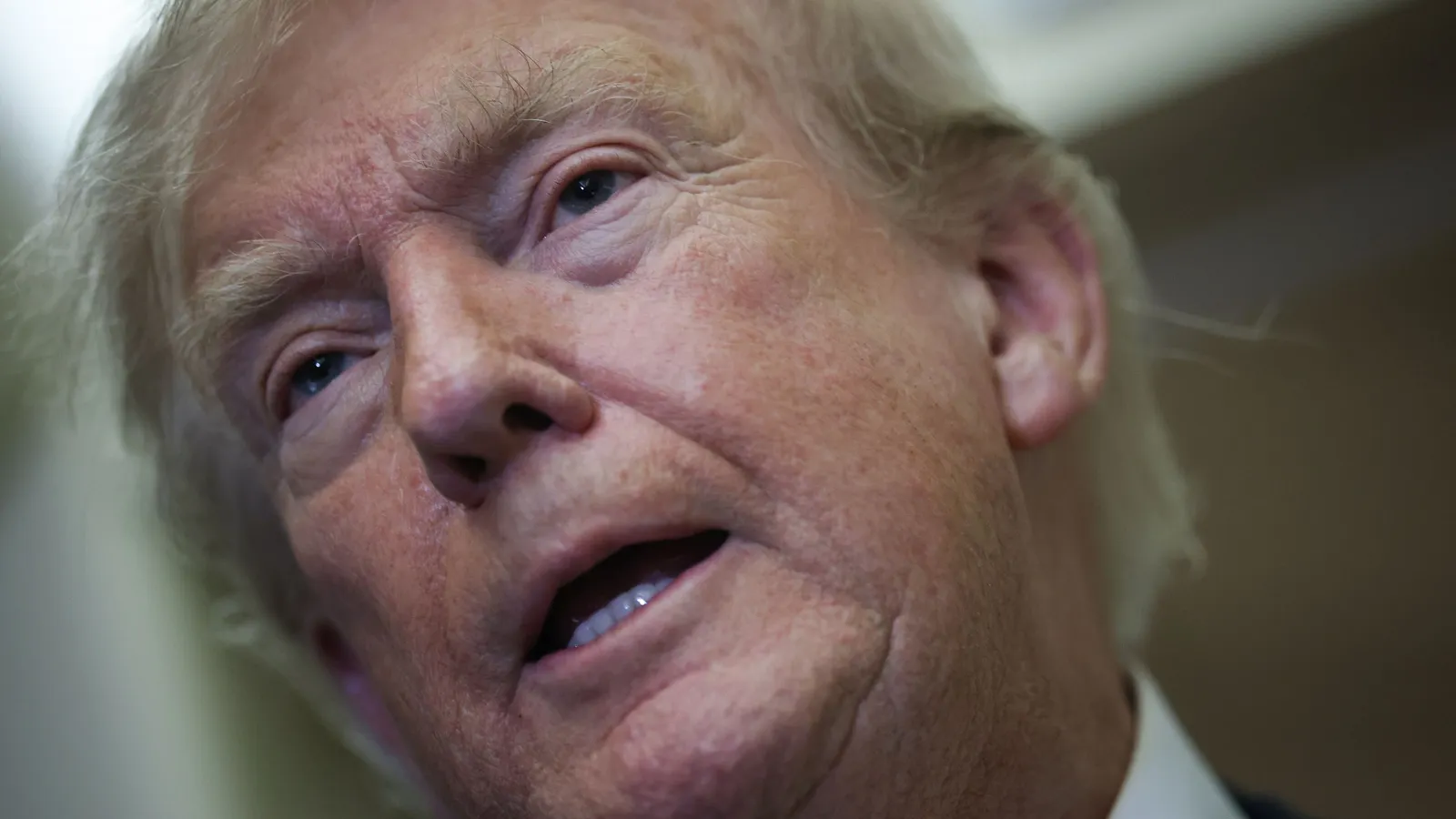
‘A razor’s edge’: How colleges are navigating civil rights probes under Trump
An article from Deep Dive ‘A razor’s edge’: How colleges are navigating civil rights probes under Trump
Some colleges have cut deals, while others have fought back against federal officials. Both come with risks, legal experts say.
Published July 20, 2026 By Danielle McLean
-
 Share
Share-
 Copy link
 -
 Email
Email -
 LinkedIn
 -
 X/Twitter
 -
 Facebook
 -
 Print
Print
-
-
 License
 -
 Add us on Google
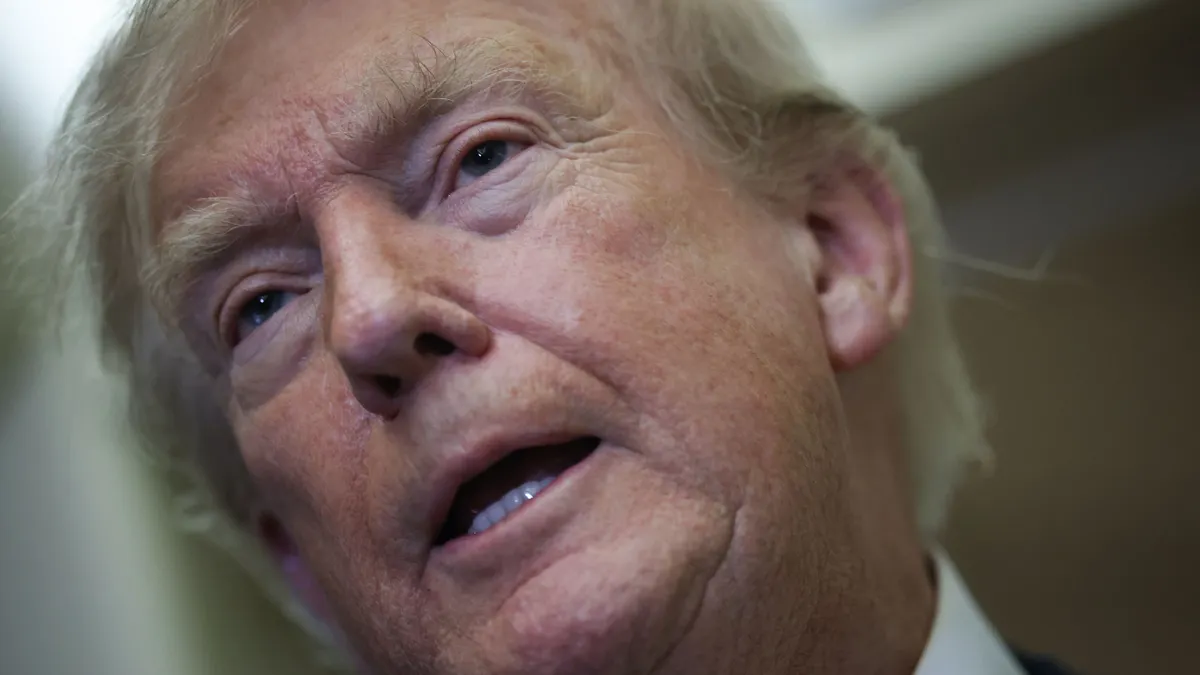
President Donald Trump speaks to media members on Air Force One on July 8, 2026. Win McNamee via Getty Images Listen to the article 13 min This audio is auto-generated. Please let us know if you have feedback.
Since President Donald Trump took office last year, his second administration has pushed the typical bounds of civil rights investigations into higher education institutions.
Federal agencies have cut funding from and opened investigations into colleges over pro-Palestinian encampments, diversity, equity and inclusion initiatives, and policies allowing transgender people to use restrooms or compete on sports teams that correspond with their gender identity.
Yet a year and a half into the new Trump administration, colleges are still looking for a blueprint to protect free speech rights and provide diverse and welcoming environments without getting caught in the crosshairs of federal officials, legal experts say.
Navigating the current civil rights enforcement landscape has been dizzying for higher education leaders, said Peter Lake, a law professor at Stetson University, in Florida.
if (window.dfp_visibility === 'mobile' ) googletag.cmd.push(function() googletag.defineSlot( '/3618/highereddive/highereddivehybrid1', [[300, 250], 'fluid'], 'dfp-hybrid1-mobile' ).addService(googletag.pubads()); ); waitToLoadAds.push(function() googletag.cmd.push(function() if (window.dfp_visibility === 'mobile' ) window.onDvtagReady?.(() => googletag.display('dfp-hybrid1-mobile')); googletag.pubads().addEventListener('slotRenderEnded', function (event) var adUnitPath = '/3618/highereddive/highereddivehybrid1'; var onProformative = false; if (onProformative && event.slot.getAdUnitPath() === adUnitPath && !event.isEmpty ) var adUnitPathWithVisibility = adUnitPath + '-mobile'; var selector = '.pf-comments__ad-wrapper #dfp-hybrid1-mobile'; if (!$(selector).closest('.pf-comments__ad-wrapper').hasClass('borders')) $(selector).closest('.pf-comments__ad-wrapper').addClass('borders') ); ); ); if (window.dfp_visibility === 'desktop' ) googletag.cmd.push(function() googletag.defineSlot( '/3618/highereddive/highereddivehybrid2', [[300, 250], 'fluid'], 'dfp-hybrid2-desktop' ).addService(googletag.pubads()); ); waitToLoadAds.push(function() googletag.cmd.push(function() if (window.dfp_visibility === 'desktop' ) window.onDvtagReady?.(() => googletag.display('dfp-hybrid2-desktop')); googletag.pubads().addEventListener('slotRenderEnded', function (event) var adUnitPath = '/3618/highereddive/highereddivehybrid2'; var onProformative = false; if (onProformative && event.slot.getAdUnitPath() === adUnitPath && !event.isEmpty ) var adUnitPathWithVisibility = adUnitPath + '-desktop'; var selector = '.pf-comments__ad-wrapper #dfp-hybrid2-desktop'; if (!$(selector).closest('.pf-comments__ad-wrapper').hasClass('borders')) $(selector).closest('.pf-comments__ad-wrapper').addClass('borders') ); ); );
“In many ways, campuses are trying to walk a razor's edge, and I'm not always sure that the edge is even there,” said Lake. “People are really grappling with that reality, that it isn't always clear what is permissible and or mandatory.”
How have colleges under investigation responded so far?
The Trump administration has pulled federal funding from high-profile universities over claims related to antisemitism or race- or sex-based discrimination — even before officials completed investigations or followed the required process for pulling those funds, said Brigid Harrington, senior attorney at law firm Hunton Andrews Kurth, in an email.
In response, these universities have taken different tacks.
The University of California system and Harvard University have — for now — successfully turned to federal courts to block the administration from freezing their federal funding.
But other institutions have reached broad — and controversial — agreements with the Trump administration. Those deals include terms that extend beyond redressing alleged civil rights violations, such as reducing a university’s dependence on international enrollment, said Harrington.
Most of those have cost the universities financially.
Columbia University paid $221 million to settle civil rights probes into the university. The university said the July 2025 agreement allowed it to avoid risking billions of dollars in federal research funding, potentially losing accreditation and possibly having the visa status of thousands of its international students revoked.
The University of Virginia’s deal with the Trump administration in October paused five civil rights investigations in exchange for adopting the federal agency’s anti-DEI guidance and making quarterly updates to the DOJ about its compliance.
if (window.dfp_visibility === 'mobile' ) googletag.cmd.push(function() googletag.defineSlot( '/3618/highereddive/highereddivehybrid2', [[300, 250], 'fluid'], 'dfp-hybrid2-mobile' ).addService(googletag.pubads()); ); waitToLoadAds.push(function() googletag.cmd.push(function() if (window.dfp_visibility === 'mobile' ) window.onDvtagReady?.(() => googletag.display('dfp-hybrid2-mobile')); googletag.pubads().addEventListener('slotRenderEnded', function (event) var adUnitPath = '/3618/highereddive/highereddivehybrid2'; var onProformative = false; if (onProformative && event.slot.getAdUnitPath() === adUnitPath && !event.isEmpty ) var adUnitPathWithVisibility = adUnitPath + '-mobile'; var selector = '.pf-comments__ad-wrapper #dfp-hybrid2-mobile'; if (!$(selector).closest('.pf-comments__ad-wrapper').hasClass('borders')) $(selector).closest('.pf-comments__ad-wrapper').addClass('borders') ); ); );
And in November, Northwestern University agreed to pay the federal government $75 million over three years and bar transgender women from women’s sports, locker rooms and shower facilities, among other provisions.
“Schools that have reached these agreements — they end investigations, they get their federal funding back,” said Risa Lieberwitz, a labor and employment law professor at Cornell University and former general counsel of the American Association of University Professors. “But it cost them, so there's been a ransom paid by the institution.”
In addition, it’s unclear if those resolutions are sustainable, said Lake. He questioned whether they would lead to further concerns and investigations by the Trump administration and if campus stakeholders were comfortable with the outcome.
“The question remains, is there a chill in the air, even after the government has reached some kind of resolution with a campus?” said Lake. “That's probably a conversation that might make it to court.”
Pushing back also comes with risks
Meanwhile, Harvard and the UC system aren't the only institutions that have refused to enter into agreements — or, Lake said, denied administration requests to turn over data that college officials considered problematic.
The University of Pennsylvania pushed back against a subpoena from the U.S. Equal Employment Opportunity Commission that demanded information about Jewish staff and faculty. The demand came amid the agency’s ongoing investigation to determine whether the university has fostered a hostile work environment for Jewish employees.
The information request caused an outcry among Jewish students and faculty. But U.S. District Judge Gerald Pappert in April paused his previous order requiring the university to comply with the administration’s request — allowing Penn to hold off on turning the data over while it appealed the decision.
Additionally, the Trump administration sent a letter to nine universities last October asking them to support a compact that promised better access to federal funding in exchange for adopting several policy priorities of the federal government. None of those colleges agreed to sign onto the deal, and seven rejected it altogether.
Still, many institutions are likely not in a position to aggressively fight the Trump administration in court, Lake said. A university’s reaction will depend on its individual situation, as no proven strategy that works across the board has emerged, Lake said.
Moreover, taking a stand against the administration and its investigations comes with risk, said Lake. “The risk of wrestling with the federal government is very high, because the government has tremendous leverage if they want to deploy it against any particular institution,” he said.
Institutions also have to consider public and community relations, as well as employee time involved in being under investigation, said Harrington. Students and employees may be concerned about how funding cuts could affect day-to-day operations, while the community's view of the institution could impact its ability to recruit faculty and students and maintain academic credibility, she said.
if (window.dfp_visibility === 'desktop' ) googletag.cmd.push(function() googletag.defineSlot( '/3618/highereddive/highereddivehybrid4', [[300, 250], 'fluid'], 'dfp-hybrid4-desktop' ).addService(googletag.pubads()); ); waitToLoadAds.push(function() googletag.cmd.push(function() if (window.dfp_visibility === 'desktop' ) window.onDvtagReady?.(() => googletag.display('dfp-hybrid4-desktop')); googletag.pubads().addEventListener('slotRenderEnded', function (event) var adUnitPath = '/3618/highereddive/highereddivehybrid4'; var onProformative = false; if (onProformative && event.slot.getAdUnitPath() === adUnitPath && !event.isEmpty ) var adUnitPathWithVisibility = adUnitPath + '-desktop'; var selector = '.pf-comments__ad-wrapper #dfp-hybrid4-desktop'; if (!$(selector).closest('.pf-comments__ad-wrapper').hasClass('borders')) $(selector).closest('.pf-comments__ad-wrapper').addClass('borders') ); ); );
The rule of law has shifted to recognize the "incredible leverage” the federal government has to change federal policy related to colleges and universities, said Lake. Higher education in the U.S. has become more centrally managed and controlled than at previous times in history, he said.
“The risk of wrestling with the federal government is very high, because the government has tremendous leverage if they want to deploy it against any particular institution,” said Lake.
Pulling funding without following the process
Many of the probes into universities stem from an executive order in the early days of Trump’s second term that directed the U.S. education secretary to inventory all Title VI complaints related to antisemitism, said Harrington, who focuses on civil rights compliance for higher education institutions. Title VI bars discrimination based on race, color or national origin in federally funded programs.
The administration also created the Task Force to Combat Anti-Semitism — composed of officials from the U.S. departments of Education, Justice and Health and Human Services. — to “root out anti-Semitic harassment in schools and on college campuses.”
Before cutting off federal funding for Title VI violations, the government is required to conduct an investigation, issue findings that the university has been noncompliant, make an effort to obtain voluntary compliance, reach a determination that voluntary noncompliance is not possible, give notice to both the university and Congress, and provide a hearing, said Lieberwitz.
“None of this has occurred,” Lieberwitz said. “They cannot cut funds without going through multiple steps, and they didn’t do that.”
Federal judges have agreed, Harrington said. That includes U.S. District Judge Allison Burroughs, who in September blocked the Trump administration from freezing more than $2 billion in research grants to Harvard.
Prior to the second Trump administration, Title VI investigations were typically resolved without federal funds being pulled — as they usually resulted in discussions and agreements between the government and the universities, said Lieberwitz.
In fact, a 2019 Congressional Research Service analysis could not find any orders from the Education Department’s Office for Civil Rights to terminate federal funding under Title VI in the past 25 years, she said. The same report said fund termination “was once aggressively used by OCR to enforce the desegregation of southern schools.”
So far, the Trump administration has not frozen federal funds for any additional institutions since federal courts blocked the move against Harvard, said Harrington. But that hasn’t stopped them from pursuing other routes.
The Trump administration recently sued institutions whose federal funding was unfrozen by a federal judge: Harvard and the University of California system. In both cases, the Trump administration is seeking payments from the institutions and the ability to cut off their federal grants.
And following the Harvard ruling, the administration now appears to be pursuing funding terminations against colleges through the legally required investigatory process, Harrington said.
The White House, DOJ, and Education Department did not respond to emailed questions about whether Trump administration officials previously followed the required investigatory process before pulling federal funding from colleges and what process they’re following currently.
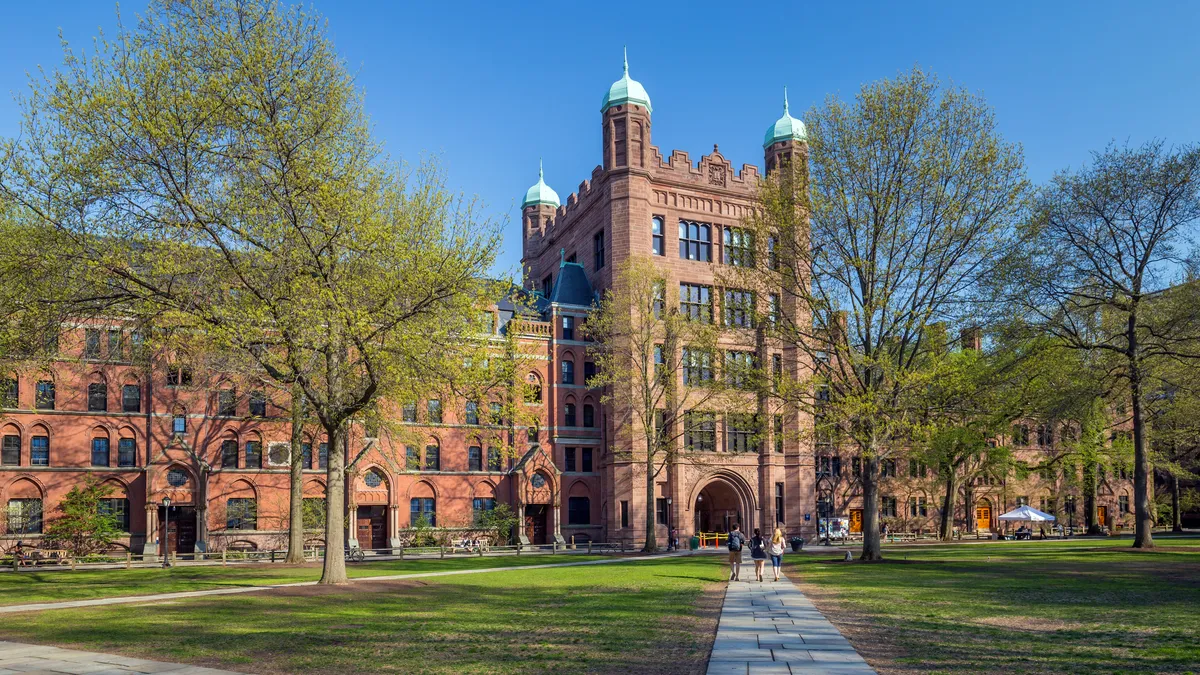
The Education Department in April opened a new Title VI investigation into whether a Stanford University program that helps K-12 teachers receive certification discriminates based on race.
It also opened two new investigations into Harvard in March without announcing any new federal funding freezes.
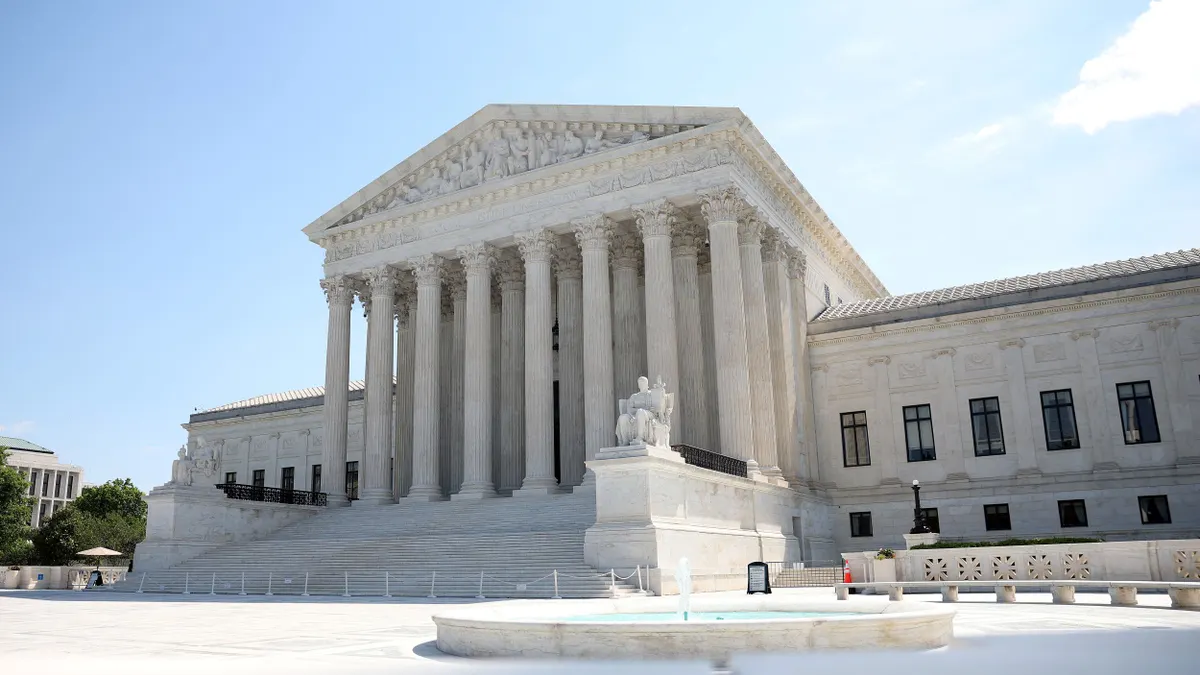
One is looking into whether Harvard has continued to use race-based preferences in admissions following the U.S. Supreme Court’s 2023 ruling. Another will probe allegations that it failed to protect Jewish students from harassment.
“The Trump Administration has been consistent in its efforts to hold colleges and universities that receive federal funds accountable for following federal law,” Education Department spokesperson Amelia Joy said in an emailed statement. “We will continue to ensure campuses across the country prioritize merit and safety over discrimination and harassment.”
Navigating civil rights issues under Trump
Colleges, meanwhile, do have ways to alleviate some of the Trump administration's concerns without violating students' or employees' civil rights, experts say.
As one example, institutions have replaced DEI-related words with other terms — such as "welcoming" — to describe an environment that sustains student well-being and provides quality education, said Lake.
Turning to allegations that the 2024 pro-Palestinian encampments protesting Israel’s wartime actions in Gaza violated Title VI, Lake said campus officials have a responsibility to redress instances of antisemitism — even if those remedies don’t directly lead to disciplinary action, said Lake. If an antisemitic symbol appears on a door on campus, the university may never catch the vandal, but officials can take actions to help people on campus feel safe, he said.
For instance, institutions can address hateful speech through community messaging or by implementing supportive measures, Harrington said. They could also impose time, place, and manner restrictions on speech — limiting where speech and protests can occur as long as the rules are applied equally, regardless of the content of the speech, Harrington said.
But universities shouldn’t think of the issue in terms of trying to stay off the administration’s radar, argued Lieberwitz.
Doing so would lead universities to engage in “anticipatory obedience,” said Lieberwitz, meaning they would make institutional changes not required by law to be “overly cautious and restrictive,” she said.
But universities should cooperate with discrimination investigations launched by federal or state agencies — providing relevant information and engaging with the investigators, said Lieberwitz.
And they should take action to address discrimination against protected groups, Harrington said. At the same time, universities need to protect academic freedom, heated disagreement and debate, and allow faculty to teach and engage in research and public speech in ways that are consistent with being a higher education institution, she said.
Likewise, Lieberwitz said the principles upholding academic freedom, free speech, intellectual inquiry and debate need to guide institutional leaders as they engage with any probes. University leaders need to push back when needed — especially when investigators make unreasonable or problematic requests for information, she added.
There is a need for “collective action by higher education institutions to uphold their principles of academic freedom and institutional autonomy in order to actually fulfill their public mission,” said Lieberwitz.
In April 2025, roughly 250 leaders of hundreds of colleges and universities signed a letter condemning the administration’s efforts to coerce institutions into changing their campus policies — citing the danger that poses to academic freedom and free speech rights. Their "call for constructive engagement" came under the auspices of the American Association of Colleges and Universities and the American Academy of Arts and Sciences.
Since then, the number of signatories have surpassed 660.
“We are open to constructive reform and do not oppose legitimate government oversight,” the statement said. “However, we must oppose undue government intrusion in the lives of those who learn, live, and work on our campuses.
- Add us on Google
- Share
- Copy link
- Email
- LinkedIn
- X/Twitter
- Facebook
- Print
-
 License
-
Filed Under: Federal Policy, Legal Higher Ed Dive news delivered to your inbox
Get the free daily newsletter read by industry experts
Email:
- Select user consent: By signing up to receive our newsletter, you agree to our Terms of Use and Privacy Policy. You can unsubscribe at anytime.
Sign up A valid email address is required. Please select at least one newsletter.Editors' picks
-

 Getty ImagesTrump administration caps student visa stays at 4 years under final ruleBy Laura Spitalniak • Updated July 17, 2026
 -
 Douglas Rissing via Getty ImagesAnother wave of Education Department regulations is comingBy Natalie Schwartz • July 8, 2026
Keep up with the story. Subscribe to the Higher Ed Dive free daily newsletter
Email:
- Select user consent: By signing up to receive our newsletter, you agree to our Terms of Use and Privacy Policy. You can unsubscribe at anytime.
Sign up A valid email address is required. Please select at least one newsletter.
var siteName = 'Higher Ed Dive' || null;
if (siteName)
setupFormCallbackAndCreateFormIfSub(siteName, 'inline');
$(document).ready(function ()
// copy the contents of the generic_signup partial into the desktop_signup_spot
$desktop_signup_spot = $("#desktop-inline-signup");
$desktop_signup = $("#inline-signup-html-desktop").children();
$desktop_signup_spot.append($desktop_signup);
$("#inline-signup-html-desktop").remove();
);
 window.carouselData = ;
window.carouselData.carouselStories = ["title": "Trump officials can\u2019t revoke grants due to new agency goals, judge rules", "link": "https://www.highereddive.com/news/trump-officials-cant-revoke-grants-due-to-new-agency-goals-judge-rules/825717/", "pub_date": "July 20, 2026", "title": "Trump administration caps student visa stays at 4 years under final rule", "link": "https://www.highereddive.com/news/trump-administration-caps-student-visa-stays-at-4-years-under-final-rule/825475/", "pub_date": "July 16, 2026", "title": "House panel OKs permanent moves for some Education Department functions", "link": "https://www.highereddive.com/news/house-oks-bills-to-permanently-move-some-education-department-functions/825419/", "pub_date": "July 16, 2026", "title": "10 bills introduced to codify outsourcing of federal education programs", "link": "https://www.highereddive.com/news/10-bills-introduced-to-codify-outsourcing-of-federal-education-programs/825012/", "pub_date": "July 13, 2026", "title": "What does the Supreme Court\u2019s transgender athlete ruling mean for higher ed?", "link": "https://www.highereddive.com/news/what-does-the-supreme-courts-transgender-athlete-ruling-mean-for-higher-ed/824973/", "pub_date": "July 13, 2026", "title": "Faculty groups question DOJ\u2019s Yale admissions claims, balk at potential deal", "link": "https://www.highereddive.com/news/faculty-groups-question-dojs-yale-admissions-claims-balk-at-potential-dea/824755/", "pub_date": "July 8, 2026", "title": "Another wave of Education Department regulations is coming", "link": "https://www.highereddive.com/news/education-department-regulations-2026-unified-agenda/824645/", "pub_date": "July 8, 2026", "title": "Education groups sue for access to nearly $2B in research funds", "link": "https://www.highereddive.com/news/lawsuit-education-research-grants-Trump-OMB-Education-Department/824360/", "pub_date": "July 2, 2026"]
// For each carousel story in our object, add the HTML contents of the corresponding .proximized_carousel_image DIV as a property
// This will be used in the carousel.mustache.html template to display the image
for (i=0; i < $('.proximized_carousel_image').length; i++)
window.carouselData.carouselStories[i].proximizedImage = $('#carousel_' + i).html().trim();
// Remove the DOM elements for the proximized images since we already have what we need from them
$('#carousel_images').remove();
window.carouselData.preferredTopic = "Federal Policy"
window.carouselData.preferredTopicLink = "/topic/federal-policy/"
window.carouselData.storylineTitle = ""
window.carouselData = ;
window.carouselData.carouselStories = ["title": "Trump officials can\u2019t revoke grants due to new agency goals, judge rules", "link": "https://www.highereddive.com/news/trump-officials-cant-revoke-grants-due-to-new-agency-goals-judge-rules/825717/", "pub_date": "July 20, 2026", "title": "Trump administration caps student visa stays at 4 years under final rule", "link": "https://www.highereddive.com/news/trump-administration-caps-student-visa-stays-at-4-years-under-final-rule/825475/", "pub_date": "July 16, 2026", "title": "House panel OKs permanent moves for some Education Department functions", "link": "https://www.highereddive.com/news/house-oks-bills-to-permanently-move-some-education-department-functions/825419/", "pub_date": "July 16, 2026", "title": "10 bills introduced to codify outsourcing of federal education programs", "link": "https://www.highereddive.com/news/10-bills-introduced-to-codify-outsourcing-of-federal-education-programs/825012/", "pub_date": "July 13, 2026", "title": "What does the Supreme Court\u2019s transgender athlete ruling mean for higher ed?", "link": "https://www.highereddive.com/news/what-does-the-supreme-courts-transgender-athlete-ruling-mean-for-higher-ed/824973/", "pub_date": "July 13, 2026", "title": "Faculty groups question DOJ\u2019s Yale admissions claims, balk at potential deal", "link": "https://www.highereddive.com/news/faculty-groups-question-dojs-yale-admissions-claims-balk-at-potential-dea/824755/", "pub_date": "July 8, 2026", "title": "Another wave of Education Department regulations is coming", "link": "https://www.highereddive.com/news/education-department-regulations-2026-unified-agenda/824645/", "pub_date": "July 8, 2026", "title": "Education groups sue for access to nearly $2B in research funds", "link": "https://www.highereddive.com/news/lawsuit-education-research-grants-Trump-OMB-Education-Department/824360/", "pub_date": "July 2, 2026"]
// For each carousel story in our object, add the HTML contents of the corresponding .proximized_carousel_image DIV as a property
// This will be used in the carousel.mustache.html template to display the image
for (i=0; i < $('.proximized_carousel_image').length; i++)
window.carouselData.carouselStories[i].proximizedImage = $('#carousel_' + i).html().trim();
// Remove the DOM elements for the proximized images since we already have what we need from them
$('#carousel_images').remove();
window.carouselData.preferredTopic = "Federal Policy"
window.carouselData.preferredTopicLink = "/topic/federal-policy/"
window.carouselData.storylineTitle = ""
ES by OMG
Euro-Savings.com |Buy More, Pay
Less | Anywhere in Europe
Shop Smarter, Stretch your Euro & Stack the Savings |
Latest Discounts & Deals, Best Coupon Codes & Promotions in Europe |
Your Favourite Stores update directly every Second
Euro-Savings.com or ES lets you buy more and pay less
anywhere in Europe. Shop Smarter on ES Today. Sign-up to receive Latest
Discounts, Deals, Coupon Codes & Promotions. With Direct Brand Updates
every second, ES is Every Shopper’s Dream come true! Stretch your dollar now
with ES. Start saving today!
Originally posted on: https://www.highereddive.com/news/a-razors-edge-how-colleges-are-navigating-civil-rights-probes-under-tru/825570/